

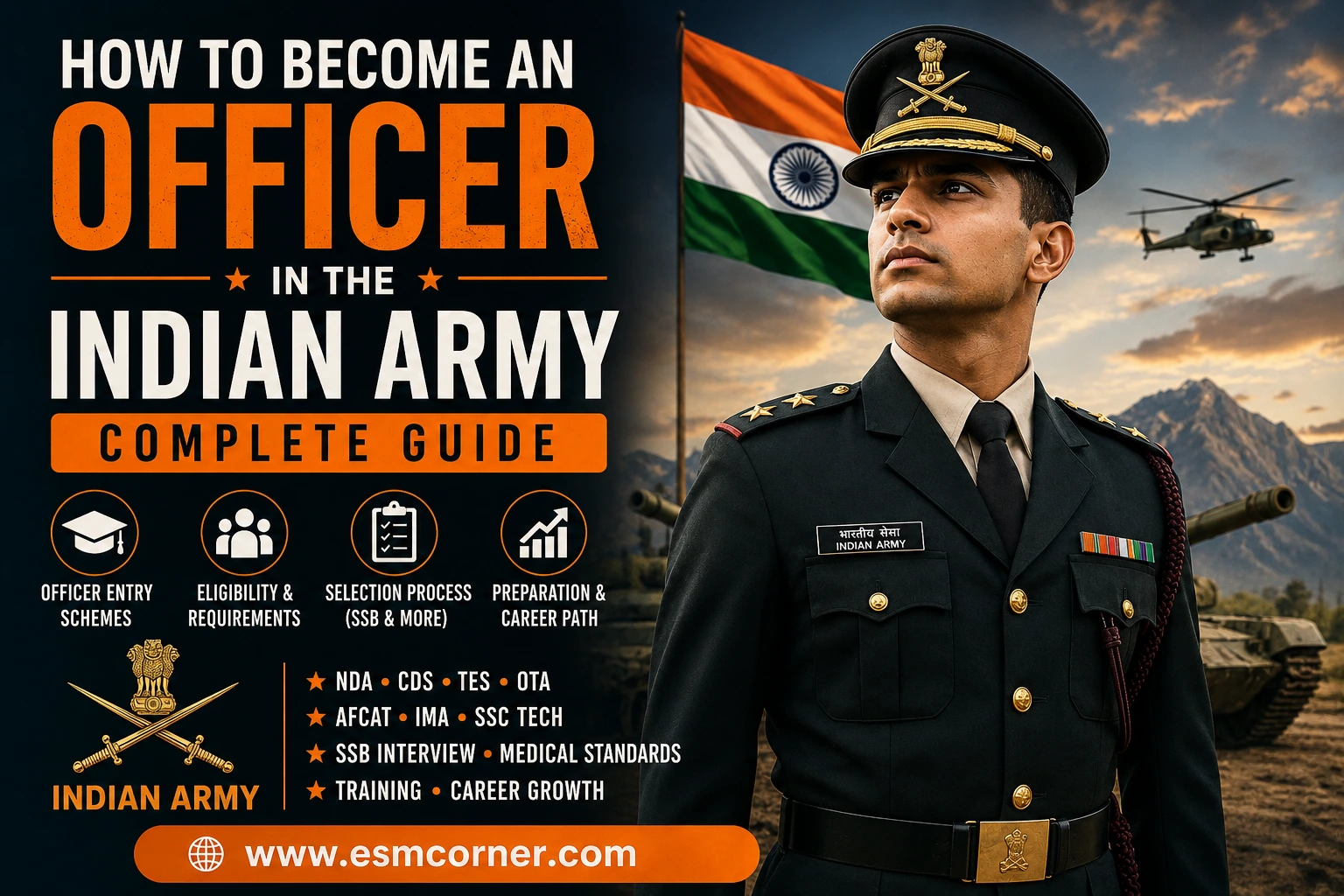
Thousands of students in India dream of becoming officers in the Indian Armed Forces, but most aspirants and parents still remain confused about the actual officer entry system. Many students know terms like NDA, CDS, AFCAT, TES, or SSB, yet they do not clearly understand which officer entry is suitable after 12th, which requires graduation, whether PCM is compulsory, or how officer selection actually works.
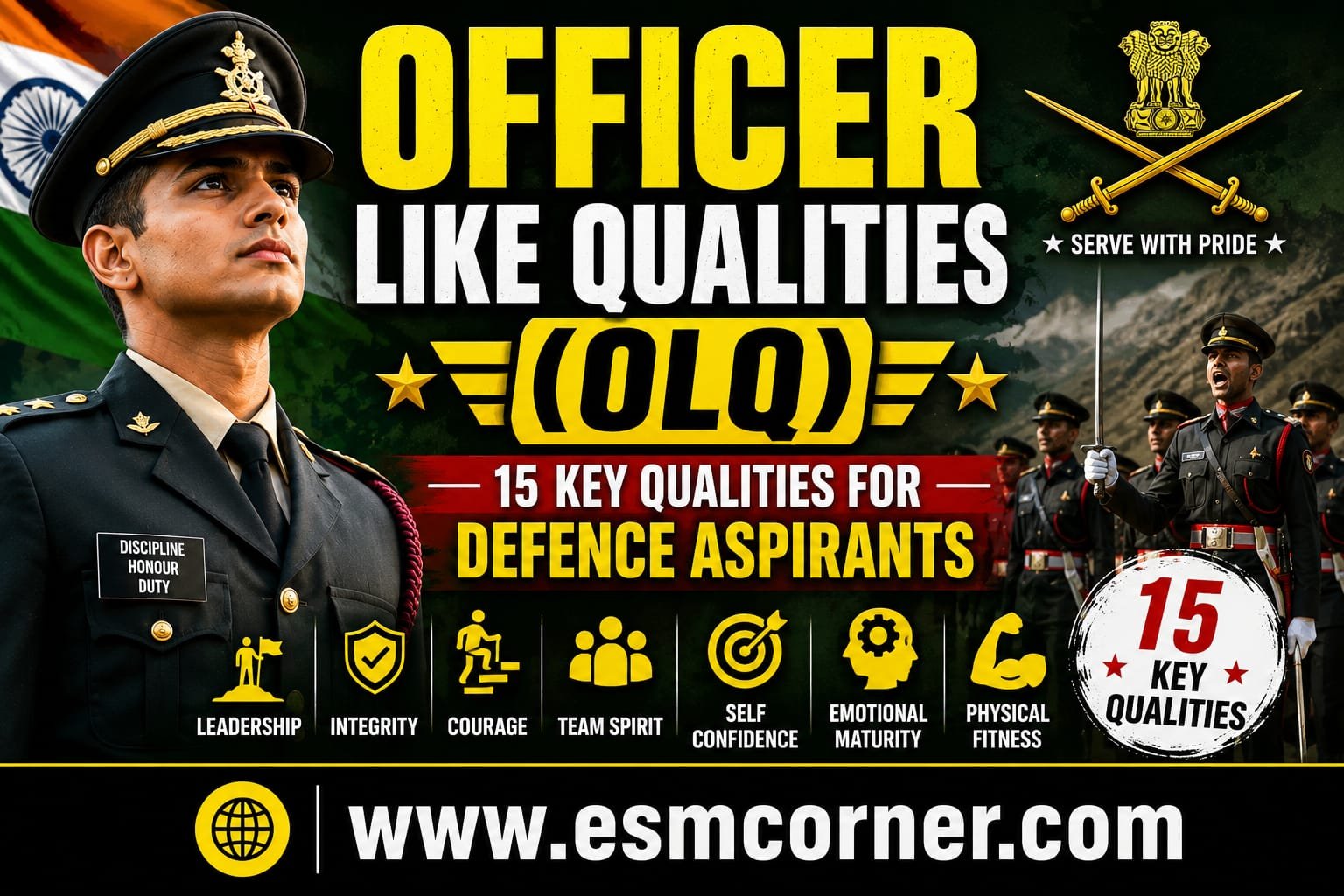
This confusion becomes dangerous because many aspirants waste years following random coaching advertisements, social media motivation, or half-correct advice. In reality, officer selection in the Indian Army, Navy, and Air Force is a professional leadership assessment system. It checks academics, communication ability, discipline, physical fitness, maturity, confidence, decision-making, and personality together.
Unlike normal government jobs, defence officer selection is not only about clearing a written examination. A candidate may score well academically and still fail in SSB because officer selection focuses heavily on behaviour, responsibility, emotional balance, and leadership qualities.
Major Officer Entries in Indian Armed Forces
After Class 12 (10+2)
- NDA (National Defence Academy)
- Technical Entry Scheme (TES 10+2) – Indian Army
- 10+2 (B.Tech) Cadet Entry Scheme – Indian Navy
After Graduation (Any Stream)
- CDS (Combined Defence Services)
- AFCAT – Ground Duty (Non-Technical)
- AFCAT – Flying Branch
- NCC Special Entry (Army)
- NCC Special Entry (Flying Branch – Air Force)
- Short Service Commission (Non-Technical) – Men (CDS OTA)
- Short Service Commission (Non-Technical) – Women (OTA)
- Territorial Army Officer Entry (for employed civilians)
After Engineering / Technical Qualification
- Technical Graduate Course (TGC) – Army
- Short Service Commission (Technical) – Men (SSC Tech)
- Short Service Commission (Technical) – Women (SSC Tech Women)
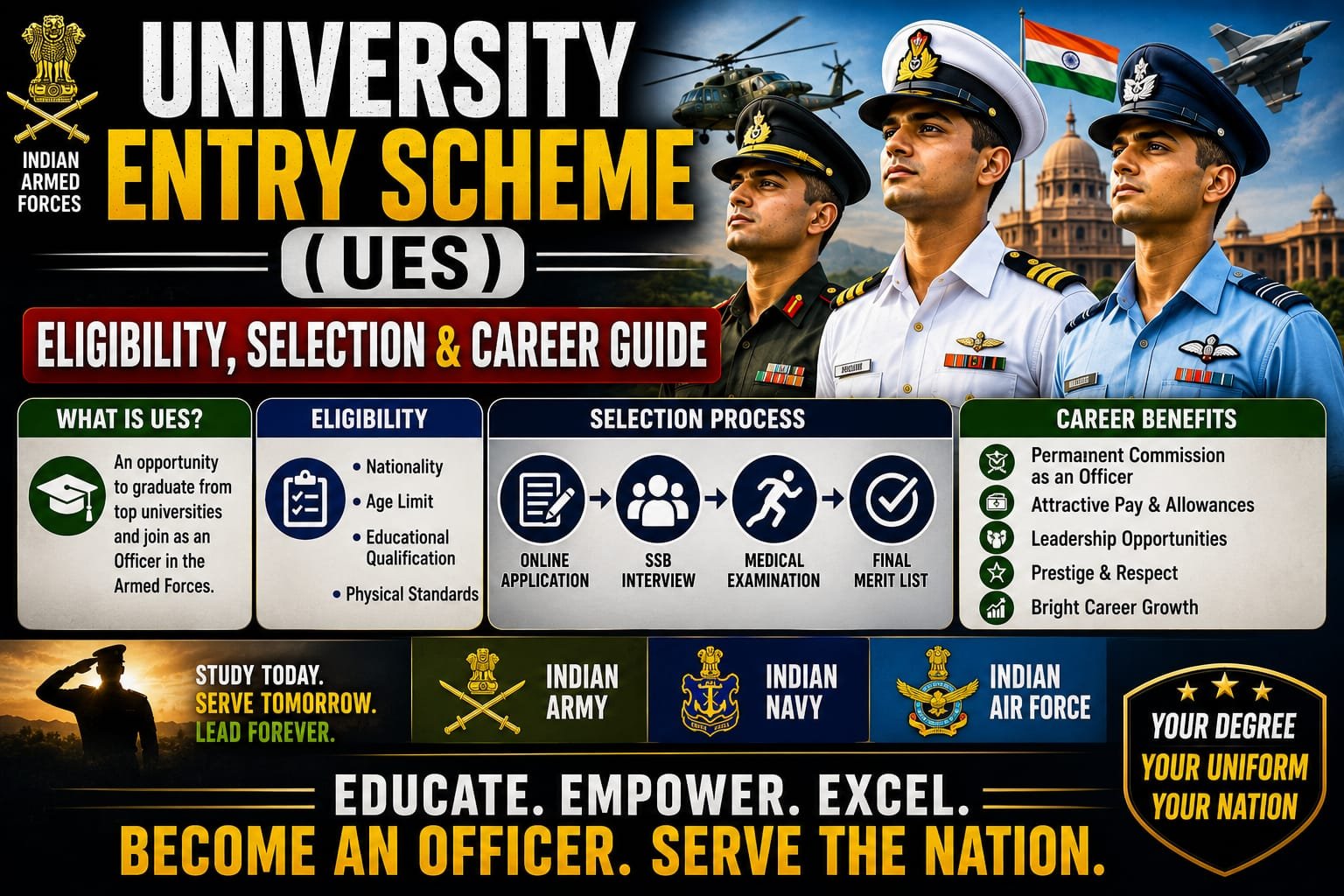
- University Entry Scheme (UES) (currently not notified regularly)
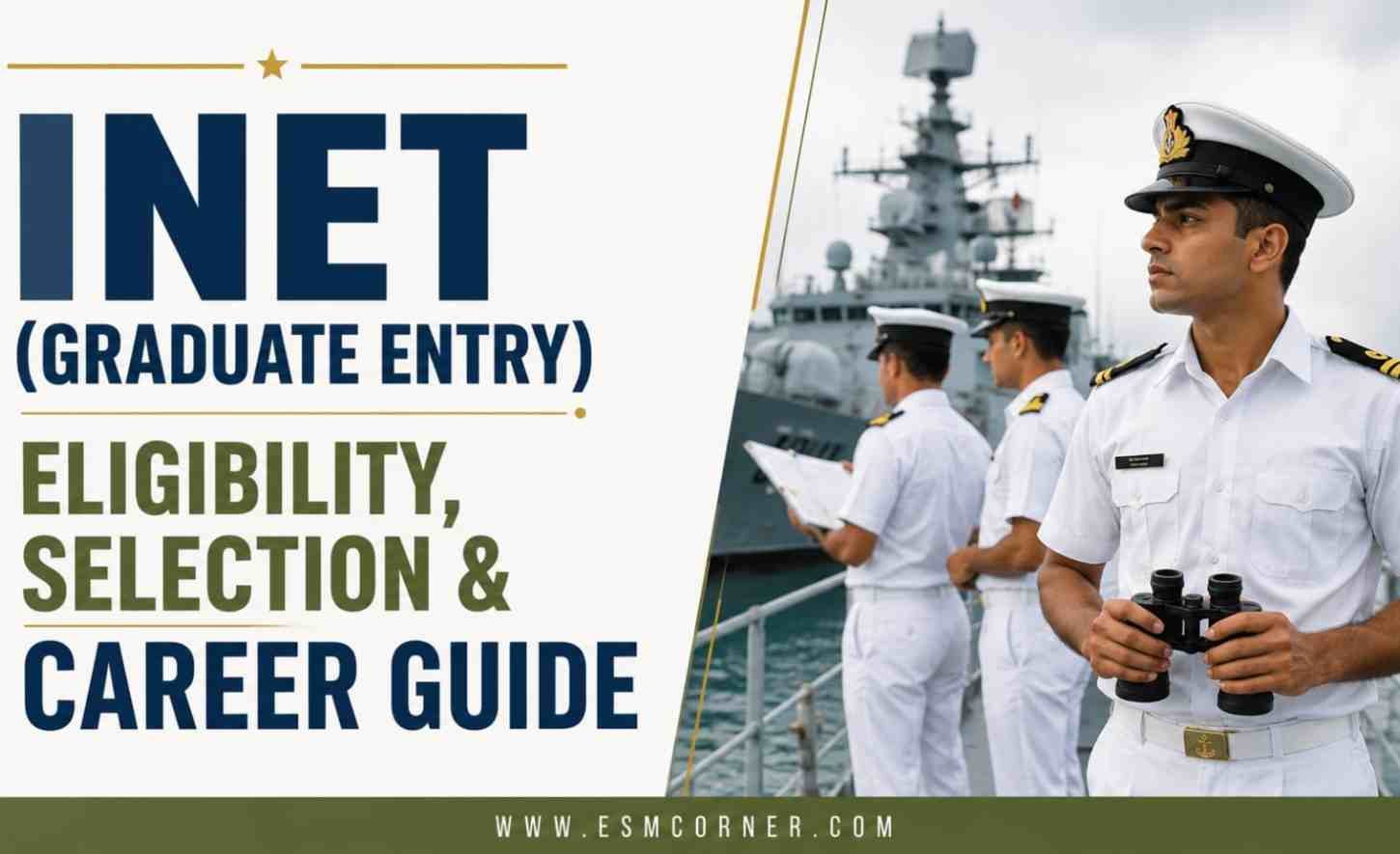
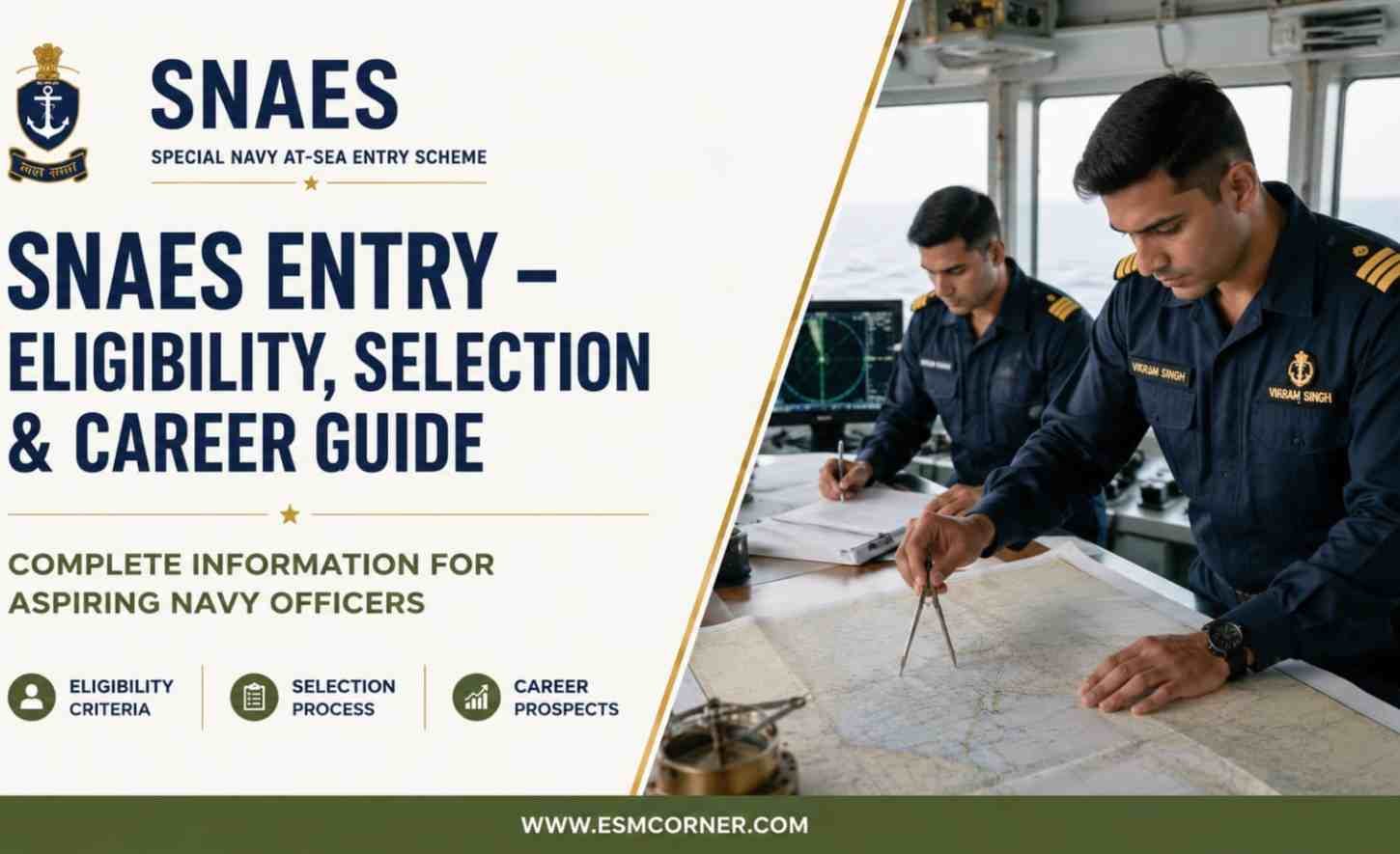
- SSC Technical – Indian Navy
- SSC Executive (Technical Branches) – Indian Navy
- Permanent Commission (Engineering Branch) – Indian Navy
- Permanent Commission (Electrical Branch) – Indian Navy
- AFCAT – Ground Duty (Technical)
After Law Degree (LLB)
- Judge Advocate General (JAG) Entry – Indian Army
After Postgraduate / Specialist Qualifications
- Army Education Corps (AEC) Entry
- SSC Education – Indian Navy
- Meteorology Branch Entry – Indian Air Force
After Medical Qualification (MBBS / Medical Degree)
- Army Medical Corps (AFMS Medical Officer)
- Medical Officer – Indian Navy (AFMS)
- Medical Officer – Indian Air Force (AFMS)
- Armed Forces Medical Services (AFMS) – Medical Officers
After BDS (Dental Degree)
- Army Dental Corps (ADC)
After Veterinary Qualification
- Remount Veterinary Corps (RVC) – Veterinary Officers
Nursing Officers
Military Nursing Service (MNS) – Commissioned Officer
NDA — Most Popular Officer Entry
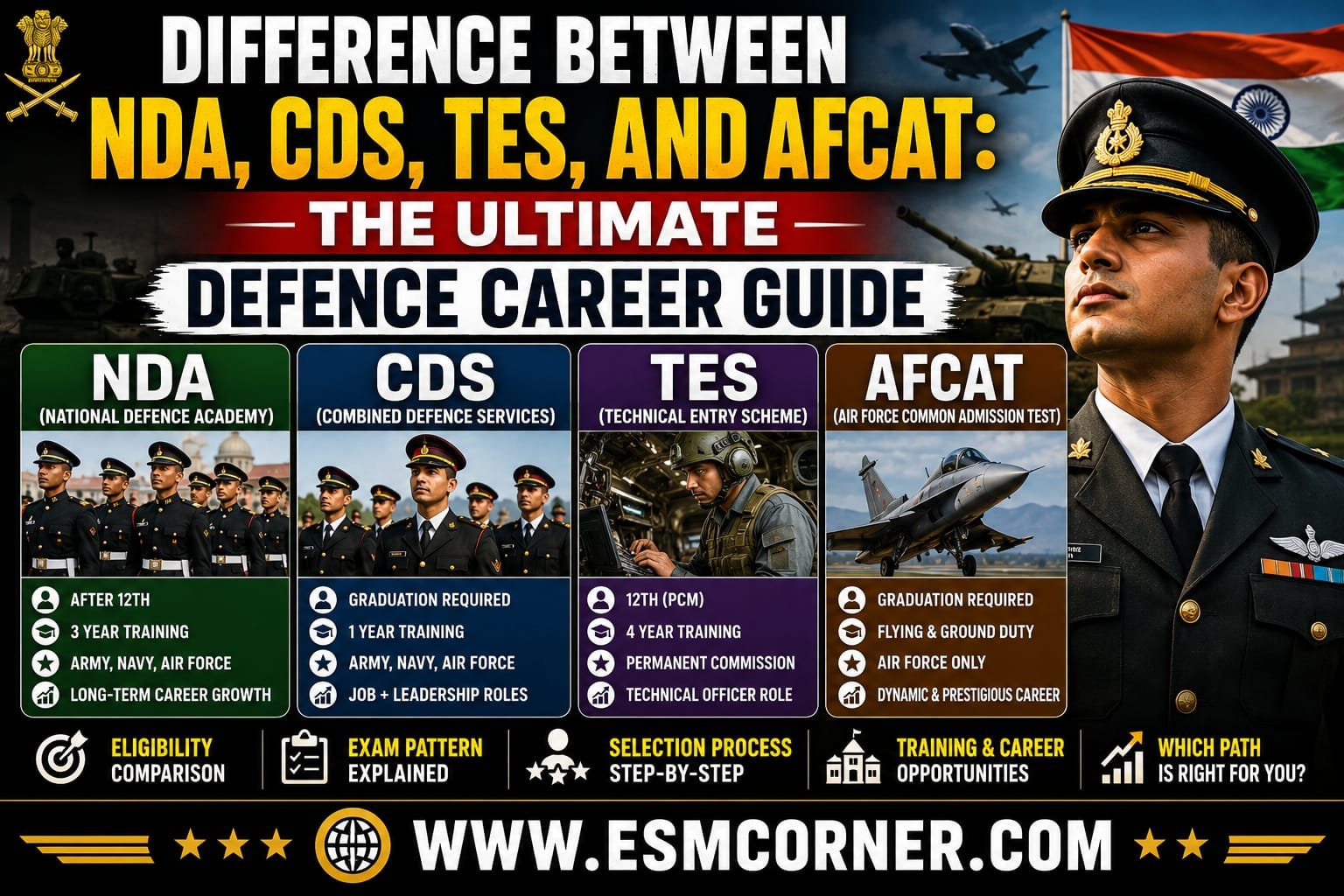
National Defence Academy (NDA) is considered the primary officer entry after Class 12. Through NDA, candidates later join:
- Indian Army,
- Indian Navy,
- or Indian Air Force.
For many defence families, NDA represents the ideal officer pathway because military grooming starts at a young age. However, competition is extremely high because vacancies remain limited while lakhs of students apply every year.
Basic NDA eligibility generally includes:
- Class 12 qualification,
- age approximately between 16.5 to 19.5 years,
- and required medical standards.
PCM is compulsory for Navy and Air Force Wings, while students from most streams can generally apply for Army Wing.
One major mistake students make is beginning preparation too late. NDA preparation requires long-term improvement in:
- mathematics,
- reading habits,
- communication skills,
- current affairs awareness,
- and physical fitness.
Students weak in basic mathematics often struggle because NDA mathematics tests conceptual understanding rather than memorized formulas.
CDS — Major Officer Entry After Graduation
Combined Defence Services (CDS) examination is conducted by UPSC for graduates interested in becoming officers in:
- Indian Military Academy,
- Officers Training Academy,
- Naval Academy,
- and Air Force Academy.
Compared to NDA candidates, CDS aspirants are generally expected to display greater maturity and personality stability during SSB interviews.
For many students, CDS becomes a practical route because graduation provides:
- additional preparation time,
- maturity,
- and backup career opportunities.
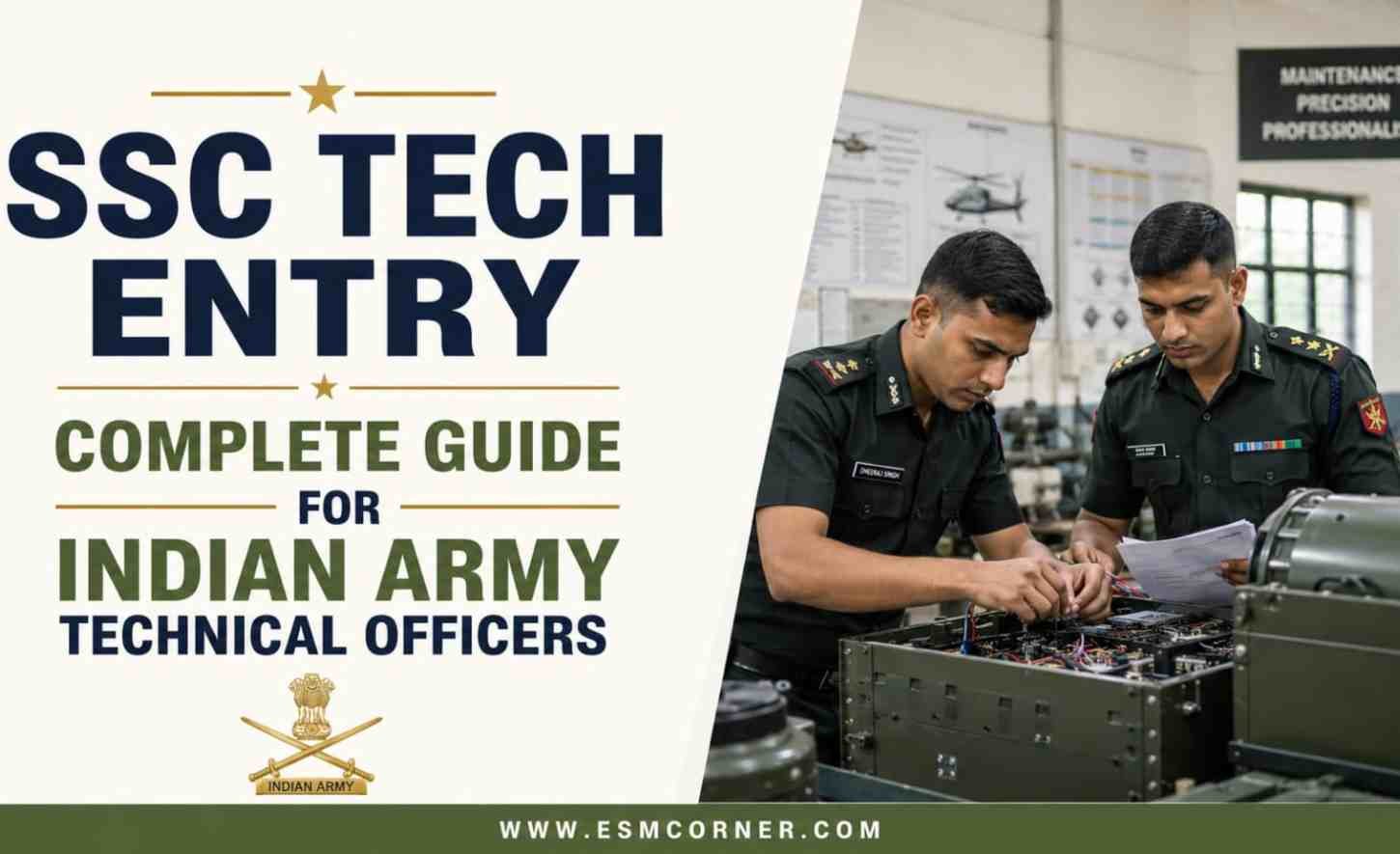
Technical Officer Entries
Students interested in engineering and technical military careers can apply through the following technical officers entry schemes:
- Technical Entry Scheme (TES 10+2) – Indian Army
- Technical Graduate Course (TGC) – Indian Army
- Short Service Commission (Technical) – Men (SSC Tech) – Indian Army
- Short Service Commission (Technical) – Women (SSC Tech Women) – Indian Army
- University Entry Scheme (UES) – Indian Army (currently not notified regularly)
- 10+2 (B.Tech) Cadet Entry Scheme – Indian Navy
- Permanent Commission (Engineering Branch) – Indian Navy
- Permanent Commission (Electrical Branch) – Indian Navy
- Short Service Commission (Technical) – Indian Navy
- Short Service Commission (Executive – Technical Branches) – Indian Navy
- AFCAT – Ground Duty (Technical) – Indian Air Force
These entries are ideal for candidates with a strong background in PCM or engineering and offer opportunities to serve as technical officers in the Indian Army, Navy, and Air Force.
- academic performance,
- shortlisting criteria,
- SSB interview,
- and medical fitness.
Many aspirants wrongly assume technical entries are easier than NDA or CDS. This understanding is incorrect because SSB standards and medical standards remain equally strict across officer entries.
SSB Interview — The Real Challenge
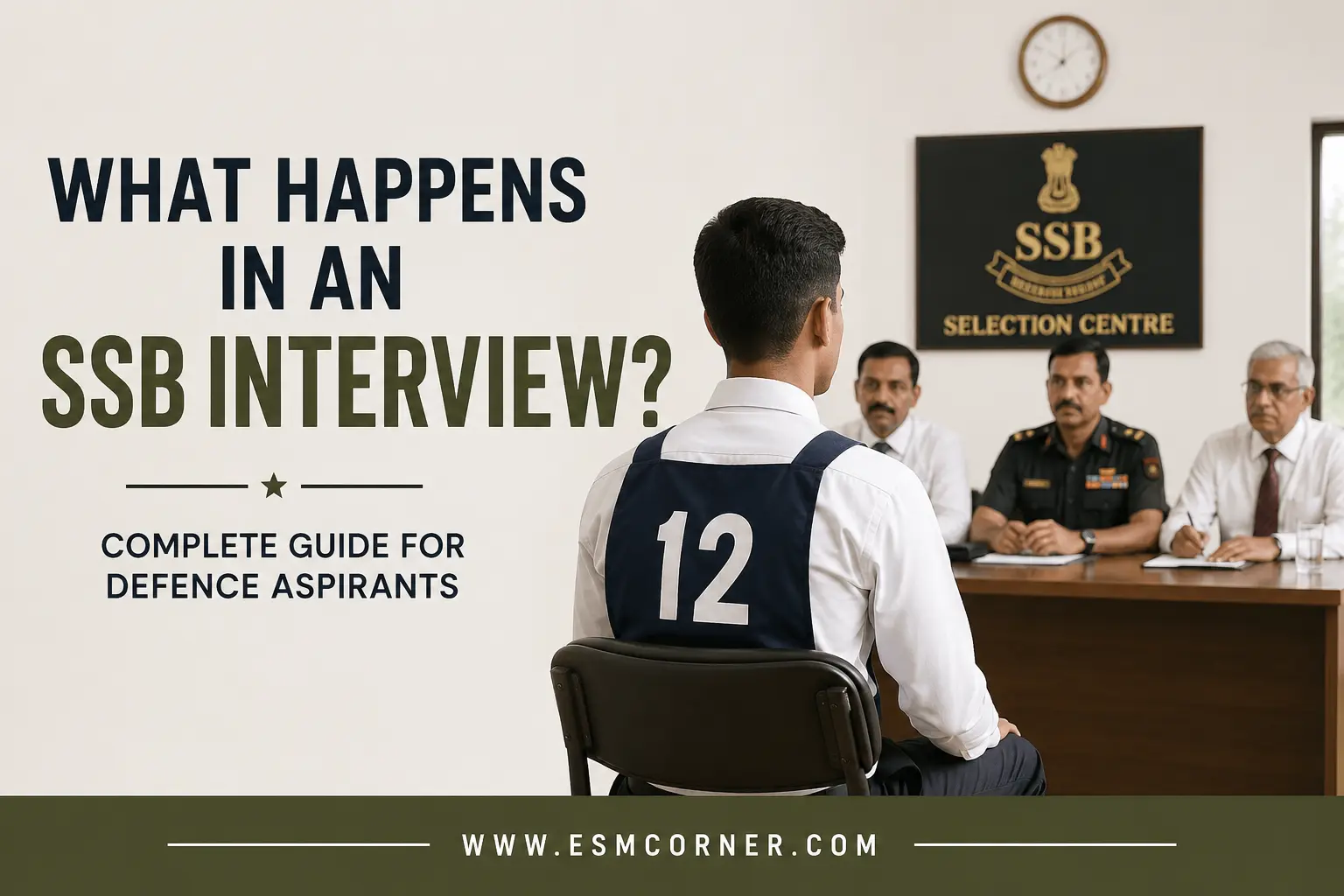
Most candidates initially believe written examination is the toughest stage. In reality, SSB interview becomes the biggest challenge for many aspirants.
SSB is a five-day personality and leadership assessment process that generally includes:
- Screening Tests,
- Psychological Tests,
- Group Discussions,
- Outdoor Tasks,
- Personal Interview,
- and Conference.
SSB assessors mainly observe:
- leadership,
- confidence,
- communication ability,
- teamwork,
- maturity,
- responsibility,
- and emotional balance.
One of the biggest misconceptions among students is that fluent English guarantees recommendation. This is completely false. Every year, many Hindi-medium and rural-background candidates clear SSB successfully because genuine personality and disciplined conduct matter far more than fake confidence or rehearsed answers.
At the same time, many overconfident candidates fail because they try to behave artificially instead of remaining natural.
Medical Standards — Most Ignored Reality
Many aspirants prepare academically for years but ignore medical fitness completely. As a result, they often face rejection during medical examination because of avoidable health problems.
Common medical rejection reasons include:
- obesity,
- poor eyesight,
- flat feet,
- knock knees,
- hearing issues,
- spine conditions,
- and low physical fitness.
Students interested in defence careers should develop:
- sports habits,
- running stamina,
- disciplined lifestyle,
- and physical conditioning from school age itself.
Physical fitness cannot be developed properly within a few weeks before SSB.
Common Mistakes Made by Defence Aspirants
A large number of candidates repeatedly fail because their preparation approach itself is wrong.
Common Mistakes
- Starting preparation too late
- Ignoring mathematics basics
- Depending fully on coaching institutes
- Avoiding newspaper reading
- Neglecting communication skills
- Watching only motivational content
- Ignoring physical fitness
- Taking medical standards casually
Officer selection is not emotional entertainment. It is a serious system designed to identify disciplined and balanced future leaders.
Permanent Commission vs Short Service Commission
Many students and parents also remain confused between Permanent Commission (PC) and Short Service Commission (SSC).
Permanent Commission generally means a full long-term military career till retirement age. Short Service Commission allows officers to serve for a limited duration according to service policies and extension rules.
Candidates should understand this difference carefully before choosing officer entries because career structure, service duration, and long-term opportunities may differ.
Opportunities for Women Candidates
Officer opportunities for women candidates have expanded significantly in recent years.
Today women can apply through:
- NDA,
- CDS OTA,
- AFCAT,
- SSC Tech,
- NCC Special Entry,
- and several technical and non-technical branches.
However, selection standards remain demanding. Women candidates are assessed on:
- officer potential,
- confidence,
- communication ability,
- personality,
- and mental robustness
similar to male candidates.
Conclusion
Today, multiple pathways exist to become an officer in Indian Armed Forces after both 12th and graduation. NDA remains the primary officer pathway after school education, while CDS, AFCAT, TES, Navy B.Tech Entry, SSC Tech, TGC, and NCC Special Entry provide additional opportunities according to educational background and career goals.
Students who prepare with discipline, physical fitness, communication ability, consistency, and realistic understanding of SSB usually perform far better than candidates depending only on coaching hype or motivational videos.
Explore more guides, preparation strategies, eligibility details, and officer-entry pathways in our Defence Career Guidance section.
Q1: What is the best way to become an officer in Indian Armed Forces after 12th?
A: NDA is generally considered the best and most recognized officer-entry after Class 12 because it provides early military grooming, leadership training, and long-term career opportunities in Army, Navy, or Air Force. PCM students can also consider TES and Navy B.Tech Entry for technical officer careers.
Q2: Which officer entries are available after graduation?
A: Graduates can apply through multiple officer entries including CDS, AFCAT, NCC Special Entry, SSC Tech, TGC, and various technical entries in Army, Navy, and Air Force. The correct pathway depends on educational qualification, engineering background, and career interest.
Q3: Is PCM compulsory for all defence officer entries?
A: No. PCM is mainly compulsory for Navy, Air Force, and technical entries like TES or Navy B.Tech Entry. For NDA Army Wing and several graduate entries, candidates from other streams can also apply according to eligibility conditions.
Q4: What is the difference between NDA and CDS?
A: NDA is an officer entry after Class 12, while CDS is mainly for graduates. NDA candidates start military grooming earlier, whereas CDS aspirants are generally expected to show greater maturity, communication confidence, and personality stability during SSB evaluation.
Q5: What does SSB Interview actually check?
A: SSB mainly checks officer-like qualities such as leadership, confidence, communication ability, teamwork, decision-making, responsibility, maturity, emotional balance, and overall personality. It is not merely an English-speaking or academic knowledge test.
Q6: Can Hindi-medium or rural-background students clear SSB?
A: Yes. Every year, many Hindi-medium and rural-background candidates clear SSB successfully. Assessors focus more on natural personality, leadership potential, confidence, and disciplined behaviour rather than polished English speaking style.
Q7: Are medical standards very strict in defence officer entries?
A: Yes. Medical standards in Army, Navy, and Air Force are strict because military service requires strong physical and mental fitness. Common rejection reasons include obesity, poor eyesight, flat feet, knock knees, hearing issues, spinal problems, and low physical fitness.
Q8: Is coaching compulsory for NDA, CDS, or AFCAT preparation?
A: No. Many successful candidates clear defence examinations through disciplined self-study, NCERT books, newspaper reading, mock tests, and regular practice. Consistency and realistic preparation matter more than expensive coaching advertisements.
Q9: What are the biggest mistakes made by defence aspirants?
A: Common mistakes include starting preparation too late, weak mathematics fundamentals, ignoring physical fitness, avoiding newspaper reading, depending only on motivation videos, neglecting communication skills, and ignoring medical standards until the final stage.
Q10: Can girls become officers in Indian Armed Forces?
A: Yes. Women candidates can now apply through multiple pathways including NDA, CDS OTA, AFCAT, SSC Tech, NCC Special Entry, and several technical and non-technical branches. Selection standards remain equally demanding and focus on officer potential, personality, confidence, communication ability, and mental robustness.
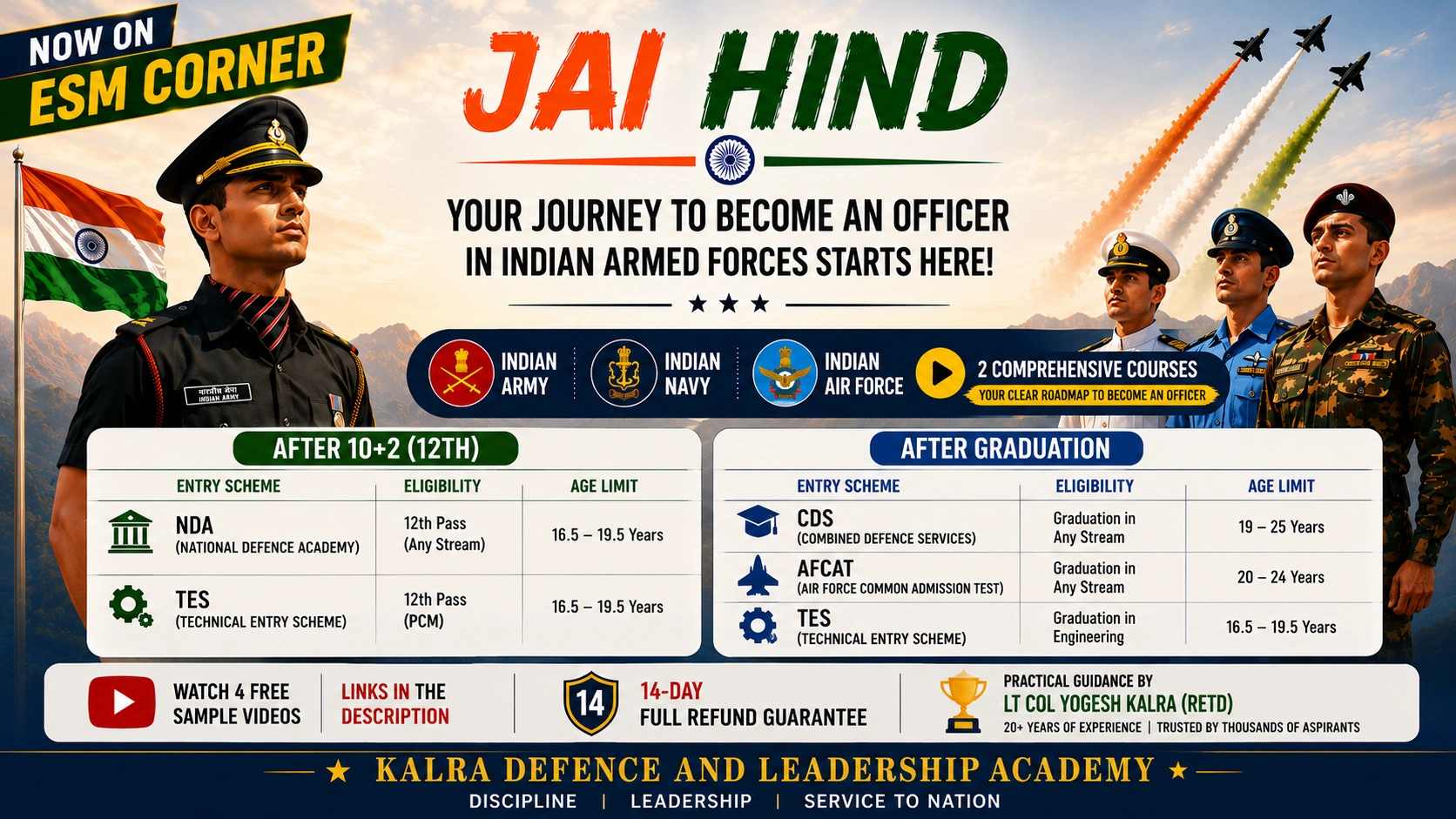
Want to Become an Officer in Indian Armed Forces?
Whether you are preparing for NDA, CDS, AFCAT, TES, SSB Interview, or other officer entries after 12th and graduation, proper guidance can save years of confusion and wrong preparation.
Lt Col Yogesh Kalra has designed practical online guidance courses covering:
• Officer entry pathways
• SSB Interview understanding
• Preparation strategy
• Common mistakes made by aspirants
• Realistic guidance for defence careers
You can first watch 4 FREE sample videos from the links below. If the course does not meet your expectations, a 14-day full refund policy is also available.
👉 Course for Defence Aspirants: https://tinyurl.com/43m67sda
👉 Course for Serving Personnel & Internal Entries: https://tinyurl.com/4h4td9kf









NDA
My daughter completed 18 YRS on 6th May 2026.how many attempts left for her ,pls guide.